There’s something magical about pulling a golden loaf of bread from your oven, but let’s be honest—the journey to that moment can feel frustrating. Many aspiring bakers give up after a few dense loaves or sticky disasters. The secret isn’t having special talent; it’s about building consistency and learning from each bake.
Start With Realistic Expectations
Professional bakers have made thousands of loaves before perfecting their craft. Your first ten loaves won’t be Instagram-worthy, and that’s completely normal. Each “failed” bread teaches you something about dough texture, fermentation timing, or oven behavior that no instruction can fully convey.
Set a simple goal: bake once a week for eight weeks. This frequency keeps the muscle memory fresh without overwhelming your schedule. Mark it on your calendar like any important appointment—because it is.
Create a Foolproof System
Consistency comes from removing guesswork. Invest in a kitchen scale and measure by weight rather than volume. Temperature matters enormously, so consider an inexpensive thermometer for both your water and your kitchen environment.
Keep a simple bread journal. Note the weather, room temperature, how the dough felt, and how the final loaf turned out. Patterns will emerge that help you adjust your approach. Was it humid? You might need less water. Cold kitchen? Give it extra rising time.
Simplify Your Recipe Selection
Don’t bounce between different recipes each week. Pick one basic bread formula and repeat it until you can make it with your eyes closed. Master a simple white loaf before tackling sourdough or intricate scoring patterns. Depth beats breadth when building skills.
Troubleshoot Instead of Quitting
When something goes wrong, resist the urge to abandon bread-making entirely. Instead, identify the specific issue:
- Dense loaf: Likely under-proofed or not enough kneading to develop gluten
- Flat bread: Over-proofed dough that exhausted its rising power
- Gummy interior: Pulled from the oven too early or too much moisture in the dough
- Pale crust: Oven temperature too low or needs steam in the first baking minutes
Each problem has a solution. The loaf that didn’t rise properly? It still makes excellent bread pudding or croutons. Nothing is wasted in bread-baking.
Build the Habit Around Your Life
Choose a baking day that aligns with your natural rhythm. Sunday afternoons work for some; Wednesday evenings for others. The timing matters less than the consistency.
Prepare your ingredients the night before. Having flour, salt, and yeast ready to go eliminates the friction that leads to skipped sessions. Make it so easy that doing it requires less effort than not doing it.
Celebrate Small Victories
Did your dough double in size perfectly? That’s worth celebrating. Was your crust crackly and golden? Take a moment to appreciate your progress. Bread-making mastery is built from hundreds of small successes, not one perfect loaf.
The bakers who succeed aren’t necessarily the most talented—they’re simply the ones who kept showing up, week after week, learning and adjusting until the process became second nature.
Recommended eBook
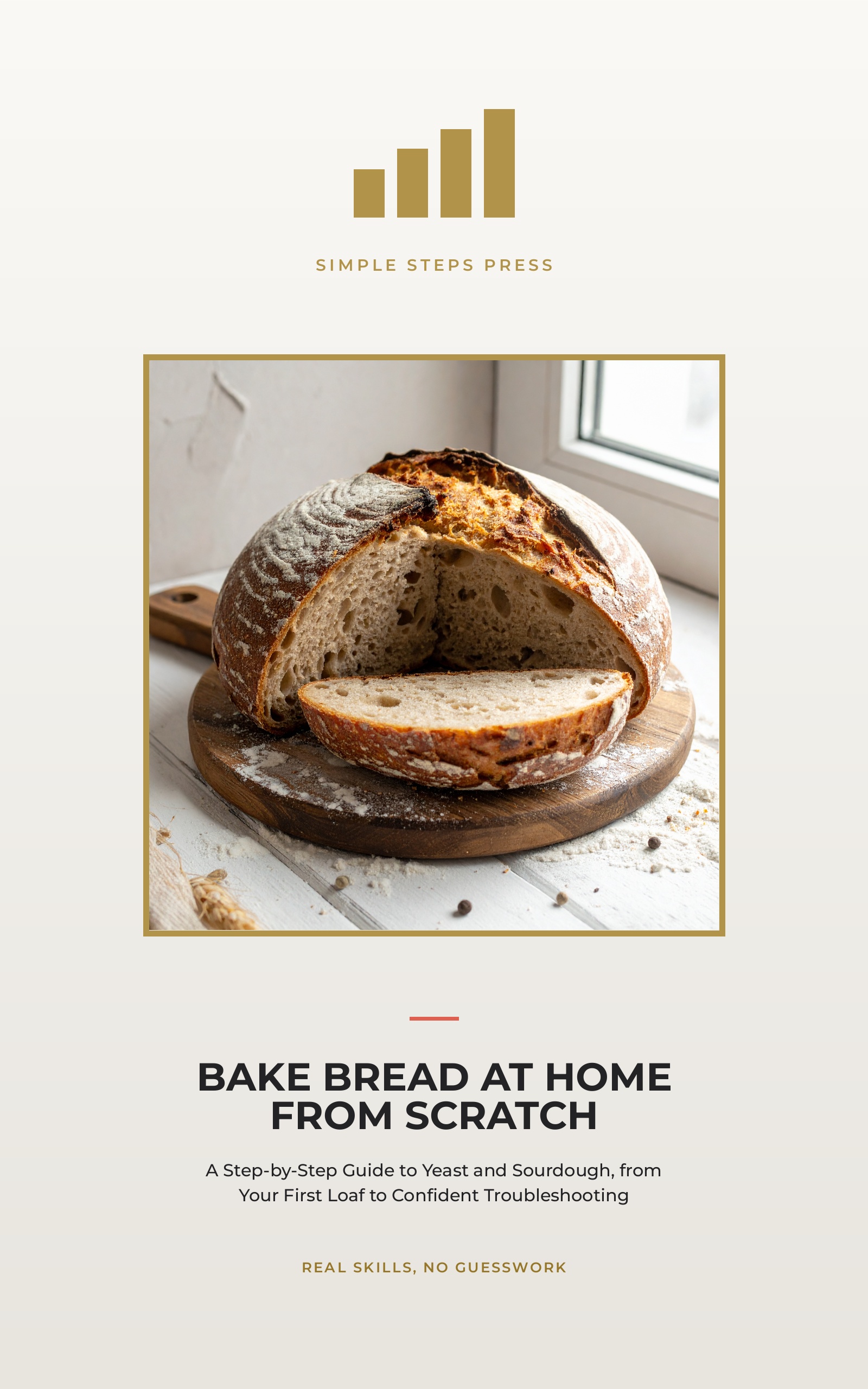
Bake Bread at Home from Scratch
A practical, easy-to-follow guide you can start using today.