Starting your bread baking journey is exciting, but it’s important to set realistic expectations. Many beginners imagine themselves pulling perfect artisan loaves from the oven within days, only to feel discouraged when reality doesn’t match the vision. Here’s what actually happens during your first 30 days of baking bread at home.
Week 1: The Learning Curve Hits Hard
Your first week will be about understanding the basics. Expect to spend time reading recipes, learning vocabulary like “autolyse” and “windowpane test,” and getting comfortable with your ingredients. Your first loaf might be dense, flat, or oddly shaped—and that’s completely normal.
During this week, focus on making simple recipes. A basic white bread or whole wheat loaf is perfect for understanding how dough should feel. Don’t worry about sourdough starters or complex techniques yet. Many bakers get overwhelmed trying advanced recipes too soon.
What You’ll Actually Learn
- How different flours absorb water differently
- What properly kneaded dough feels like
- Why timing matters more than you thought
- That kitchen temperature affects everything
Week 2-3: Small Victories and Adjustments
By week two, you’ll start noticing improvements. Your loaves might still be imperfect, but you’ll understand why. This is when most bakers begin experimenting with different recipes and techniques.
You’ll probably start developing preferences—maybe you enjoy the hands-on kneading process, or perhaps you prefer no-knead methods. This is also when you’ll figure out which tools you actually need versus what’s just nice to have.
Week three brings a turning point. Your muscle memory starts kicking in, and you’ll handle dough with more confidence. You might even have a loaf that makes you genuinely proud. This is the week many bakers get hooked for life.
Week 4: Building Your Foundation
The final week of your first month is about consistency. Can you recreate that good loaf from week three? This is where you refine your process and start troubleshooting like a real baker.
You’ll begin recognizing problems before they happen—dough that’s too dry, yeast that didn’t activate properly, or overproofing. These observations are invaluable and can only come from hands-on experience.
Realistic Expectations After 30 Days
After one month, you should be able to:
- Bake a consistent basic loaf that your family enjoys
- Understand fundamental techniques and terminology
- Identify what went wrong when a loaf doesn’t turn out
- Feel comfortable experimenting with simple variations
You won’t be a master baker, and that’s perfectly fine. What matters is that you’ve built a solid foundation and developed the confidence to keep improving. The beautiful thing about bread baking is that there’s always something new to learn, and every loaf teaches you something valuable.
Remember, even experienced bakers occasionally produce less-than-perfect loaves. The key is enjoying the process and celebrating the progress you make along the way.
Recommended eBook
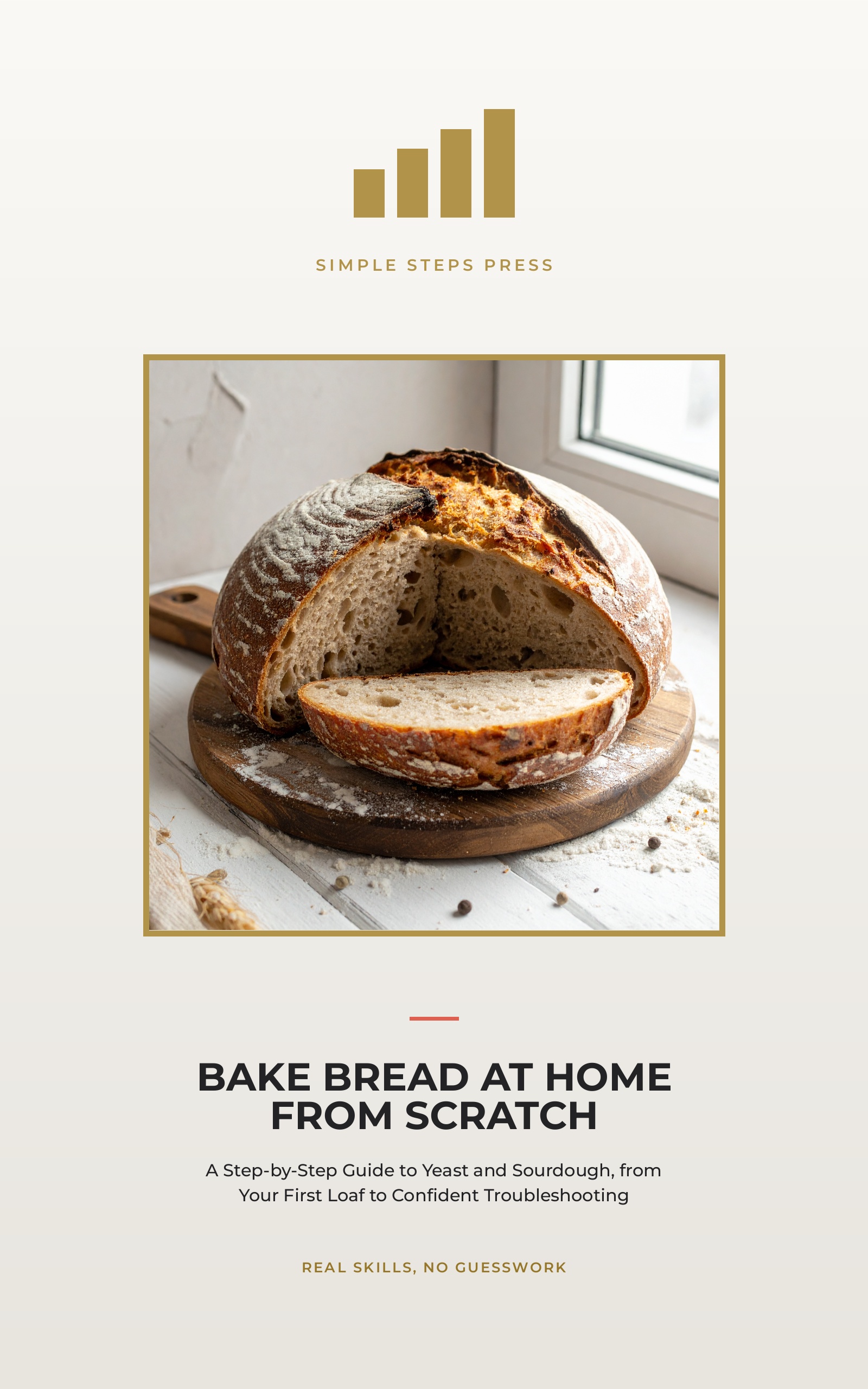
Bake Bread at Home from Scratch
A practical, easy-to-follow guide you can start using today.